


Learn about its symptoms and treatment options.

An ankle specialist has the training and expertise to accurately diagnose your condition and guide you toward the most effective treatment.
Consult Dr Seng if persistent ankle pain or instability is affecting your daily activities and mobility.

Learn about its symptoms and treatment options.

Explore its causes, symptoms and available treatments.
An ankle specialist has the training and expertise to accurately diagnose your condition and recommend the most effective treatment plan.
Consult Dr Seng if conservative treatment no longer provides adequate relief for your ankle pain.

Dr Seng Chusheng
Senior Consultant Orthopaedic Surgeon (Sports & Exercise Medicine)
MBBS (Singapore), MRCS (Edinburgh), MMed (Orth), FRCS (Edinburgh)

Ankle pain and instability can make even simple daily activities difficult, from walking and climbing stairs to exercising and standing for long periods. While many ankle conditions improve with rest, medication, physiotherapy, or bracing, some injuries and degenerative problems may require surgical treatment for lasting relief. This treatment is intended to relieve pain, restore function and help you return safely to your usual activities.
In order to determine whether this surgical treatment is necessary, an ankle specialist will need to carry out a careful assessment of your symptoms, condition severity, lifestyle needs and response to non-surgical treatment.
When Is Ankle Surgery Recommended?
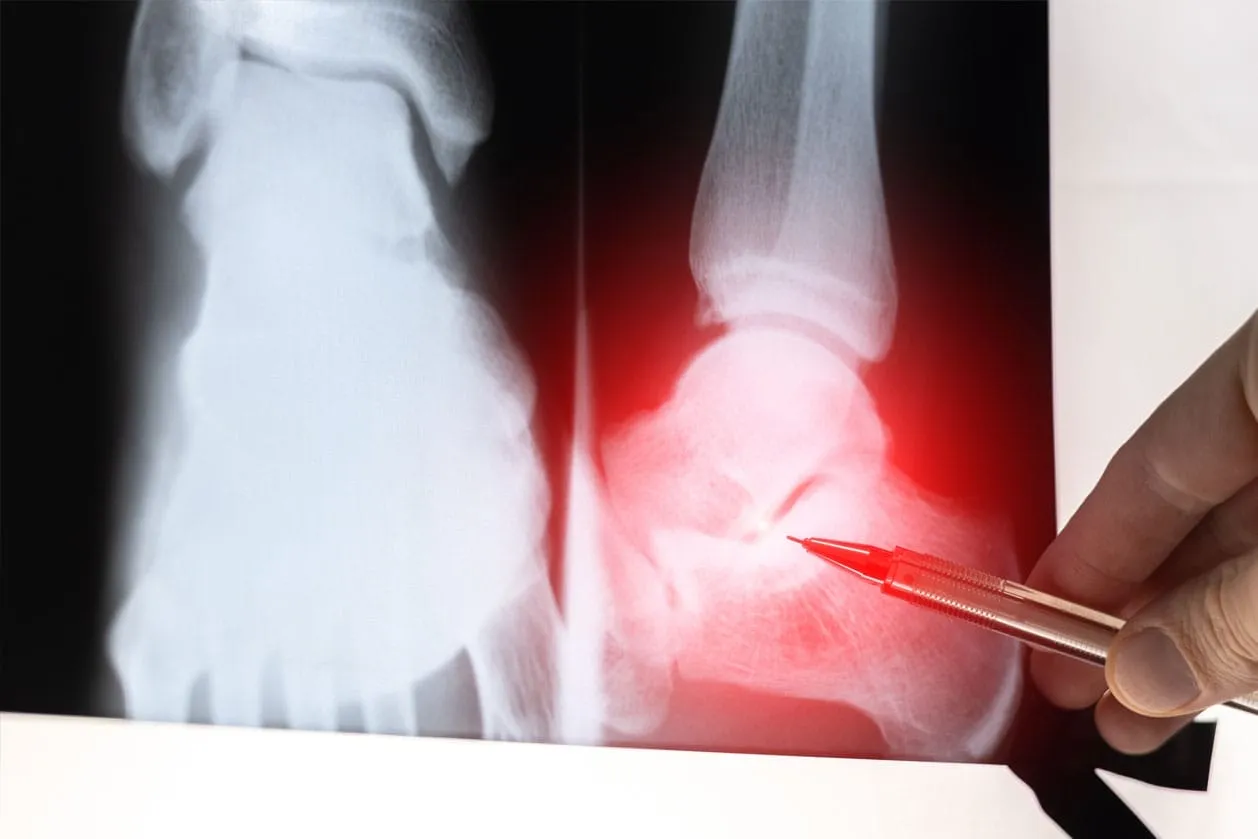
Ankle surgery is typically recommended when you have an ankle condition that non-surgical treatments cannot relieve, or when the injury is too severe to heal properly on its own. This may include fractures where the bones are displaced, severe ligament injuries that cause persistent instability, tendon injuries, cartilage damage, ankle impingement, or advanced arthritis affecting joint movement and comfort.
Surgery may also be considered if you continue to experience chronic ankle pain, swelling, weakness, or repeated ankle sprains that interfere with walking, exercise, work, or other daily activities. In some cases, early surgical treatment can help restore alignment and stability, reducing the risk of long-term complications and improving recovery outcomes.
Experiencing recurring ankle pain?
Schedule an appointment with us today to assess whether ankle surgery may benefit you
Types of Ankle Procedures

The type of ankle treatment recommended depends on your specific condition, severity of injury, activity level and treatment goals. Many procedures can be performed using minimally-invasive techniques, while others may require open surgery for more complex cases.
Ankle Arthroscopy and Ligament Repair
Ankle arthroscopy is a minimally-invasive “keyhole” procedure that uses a small camera and specialised instruments to diagnose and treat problems within the joint. It is commonly used to address ligament injuries, ankle instability, impingement and loose fragments within the joint.
Ankle Cartilage Repair - Arthroscopic and Open
Cartilage repair procedures aim to treat damage to the joint surface, which can cause pain, swelling and reduced movement. Depending on the size and severity of the defect, this may be performed arthroscopically or through an open approach.
These procedures help restore smoother joint movement, relieve symptoms and may slow further joint deterioration.
Ankle Fusion - Arthroscopic and Open
Ankle fusion, also known as arthrodesis, involves joining the bones of the ankle joint to eliminate painful movement. This procedure is typically considered for severe arthritis or advanced joint damage when other treatments are no longer effective.
Fusion can be performed using minimally-invasive or open techniques, depending on the complexity of the condition.
Total Ankle Replacement
Total ankle replacement involves replacing the damaged ankle joint with an artificial implant to preserve joint movement while relieving pain. It is usually considered for selected patients with advanced arthritis who wish to maintain mobility.
Ankle Fractures / Dislocations
Surgical treatment may be required for ankle fractures or dislocations where the bones are displaced or the joint is unstable. The procedure typically involves realigning the bones and securing them with plates, screws, or other fixation devices to allow proper healing and restore function.
What to Expect During Ankle Surgery Procedures
Modern surgical methods aim to improve the precision of operations, minimise tissue disruption and reduce post-operative pain.
Ankle surgery procedures are typically performed under general or regional anaesthesia to ensure the comfort of the patient throughout. Once they are anaesthetised, the ankle surgeon will create an incision to access the joint, and then repair, stabilise or replace affected structures as needed.
Most ankle procedures take about 1–3 hours, depending on the complexity of the surgery and the extent of the damage being treated. After the procedure, you will be monitored in recovery before being transferred to a ward.
A hospital stay of approximately 1–3 days is usually expected, although this may vary based on your recovery progress and the type of surgery performed.
Recovery and Rehabilitation After Ankle Surgery

During your hospital stay, your doctor will guide you on the post-operative care required, including wound care, pain management and activity restrictions to support proper healing.
In the initial phase after surgery, rest and immobilisation are important to reduce swelling and protect the ankle. You may be advised to use a cast, brace, or walking boot, depending on the procedure performed.
As healing progresses, your specialist will typically aid you in beginning a structured physiotherapy programme to help restore strength in the ankle. Weight-bearing activities can typically resume under medical guidance.
Full recovery can take several months, depending on the type of surgery and individual healing response. Regular follow-up with your doctor helps ensure recovery is on track and allows for adjustments to your rehabilitation plan if needed.
Why Choose Our Clinic for Ankle Surgery Treatment?
Axis Ankle Pain Clinic is a specialist clinic focusing on treating a wide range of ankle conditions. We offer:
Extensive experience in foot & ankle surgery
Our team has managed a wide range of complex ankle conditions, ensuring a high level of surgical precision and patient care.Expertise in modern ankle care techniques
Our ankle doctor, consultant orthopaedic surgeon Dr Seng Chusheng, utilises up-to-date surgical approaches and advanced implant systems designed to improve joint function and longevity.Personalised treatment plans tailored to patient needs
Each patient is different. As such, we create individualised care plans based on the condition, lifestyle and recovery goals of each patient.A focus on advanced care, comfort and long-term functional improvement
From consultation through recovery, we prioritise patient comfort while aiming for lasting mobility, stability and quality of life.Looking for ankle treatment in Singapore?
Supporting Recovery and Ankle Function With an Ankle Specialist
If mild to moderate ankle pain or stiffness is affecting your daily activities, seeking early specialist advice can help you explore appropriate surgical and non-surgical options to support recovery and prevent further injury. At Axis Ankle Pain Clinic, care is guided by a structured and patient-focused approach, ensuring that each individual receives a comprehensive assessment and a treatment plan tailored to their needs.
Under the care of Dr Seng Chusheng, a Consultant Orthopaedic Surgeon specialising in ankle conditions, patients are supported through every stage of their treatment journey, from diagnosis to recovery.
Contact us today to schedule a consultation and take the next step towards restoring mobility, stability and long-term ankle function.
Frequently Asked Questions (FAQs) on Ankle Surgery Treatment
Is ankle surgery always necessary for ankle pain?
How do I know if I need ankle surgery?
When can I start walking after ankle surgery?
Can ankle problems return after surgery?

Our Ankle Specialist in Singapore
Dr Seng Chusheng
Senior Consultant Orthopaedic Surgeon (Sports & Exercise Medicine)
MBBS (Singapore), MRCS (Edinburgh), MMed (Orth), FRCS (Edinburgh)
Dr Seng Chusheng is a consultant orthopaedic surgeon specialising in ankle treatment, and experienced in complex ankle fracture fixation, keyhole ligament reconstruction and cartilage repair for sports injuries of the ankle. He also offers a wide repertoire of treatment options for patients with ankle arthritis, ranging from minimally-invasive arthroscopic ankle fusion to joint replacement.
Dr Seng holds an MBBS and MMed (Orthopaedic Surgery) from the National University of Singapore, and is a Fellow of the Royal College of Surgeons of Edinburgh, UK (Orthopaedic Surgery). He has presented extensively at many orthopaedic conferences including the prestigious American Academy of Orthopaedic Surgeons (AAOS) Annual Scientific Meeting.
At Axis Ankle Pain Clinic, supporting our patients in their recovery and regaining of mobility is our top priority.
We warmly welcome patients with ankle conditions from all walks of life to experience our customised treatment. Contact us to book a same-day or next-day consultation!
Contact Info

Mount Elizabeth Novena Medical Centre
38 Irrawaddy Road, #06-33Singapore 329563
Parkway East Medical Centre
319 Joo Chiat Place, #04-08,Singapore 427989
Mount Alvernia
Medical Centre A
820 Thomson Road, #03-08,Singapore 574623

Telephone



Operating Hours
| Mon - Fri | : | 8:30am - 5:30pm |
| Sat | : | 8:30am - 12:30pm |
| Sunday & PH : Closed | ||