


Learn about its symptoms and treatment options.

An ankle specialist has the training and expertise to accurately diagnose your condition and guide you toward the most effective treatment.
Consult Dr Seng if persistent ankle pain or instability is affecting your daily activities and mobility.

Learn about its symptoms and treatment options.

Explore its causes, symptoms and available treatments.
An ankle specialist has the training and expertise to accurately diagnose your condition and recommend the most effective treatment plan.
Consult Dr Seng if conservative treatment no longer provides adequate relief for your ankle pain.

Dr Seng Chusheng
Senior Consultant Orthopaedic Surgeon (Sports & Exercise Medicine)
MBBS (Singapore), MRCS (Edinburgh), MMed (Orth), FRCS (Edinburgh)

The ankle plays a critical role in your everyday life by supporting your body weight and enabling smooth, coordinated movement. It allows you to walk, climb stairs, maintain balance and adapt to different surfaces.
When the ankle joint is functioning well, these movements should feel natural and effortless. Over time, however, the ankle joint can lose its normal function. This may occur when the cartilage that cushions the joint gradually wears down or when previous injuries, such as fractures or severe sprains, disrupt the joint’s alignment and stability. As the protective cartilage deteriorates, the bones may begin to rub against each other, leading to pain, stiffness and reduced range of motion.
As joint function declines, everyday activities can become increasingly difficult. Walking longer distances, standing for extended periods or navigating uneven ground may cause discomfort or instability. In more advanced stages, the ankle may feel weak, stiff or persistently painful, even at rest.
When this loss of function significantly affects mobility and quality of life, and non-surgical treatments no longer provide adequate relief, surgical options may be considered. Total ankle replacement is one such option that aims to restore joint function and improve overall movement.
What Is Total Ankle Replacement Surgery?
Total ankle replacement surgery is an ankle treatment procedure designed to address damage within the joint by replacing the worn or diseased surfaces with artificial components.
During the surgery, the damaged cartilage and portions of bone are carefully removed from the joint. These are then replaced with high-quality metal and plastic prosthetic components that are engineered to replicate the natural movement of the ankle.
By restoring the smooth interaction between joint surfaces, the procedure aims to reduce pain, improve mobility and support better overall joint function.
Many modern total ankle replacement techniques are minimally invasive, helping to reduce soft-tissue disruption, minimise scarring and support a more efficient recovery compared to older surgical methods.
When Do You Need Total Ankle Replacement?

Total ankle replacement may be considered when ankle joint damage progresses to a stage where it significantly affects function, mobility and quality of life. This typically occurs due to a long-term ankle condition.
Total ankle replacement is typically part of a structured treatment pathway and is evaluated when conservative measures are no longer effective in managing symptoms. You may require total ankle replacement if you experience:
- Chronic ankle pain that interferes with daily activities
- Severe ankle arthritis, including osteoarthritis, rheumatoid arthritis or post-traumatic arthritis
- Limited ankle motion and persistent stiffness
- Pain that does not improve with physiotherapy, medications or bracing
- Imaging findings such as X-rays or MRI showing advanced joint damage or deformity
Experiencing chronic ankle pain?
Schedule an appointment with us today to assess whether total ankle replacement surgery may be necessary for you?
What Are the Benefits of Undergoing Total Ankle Replacement Surgery?
The primary intent of total ankle replacement surgery is to restore function to a damaged ankle joint. This allows a patient to regain mobility, making everyday movement more comfortable and manageable. Ankle replacement surgery can result in:
- Reduction in chronic ankle pain
- Improved joint flexibility
- Increased ability to walk and perform daily activities
- Enhanced balance and stability when moving
- Better sense of independence in everyday life.
What Happens During the Surgical Procedure?
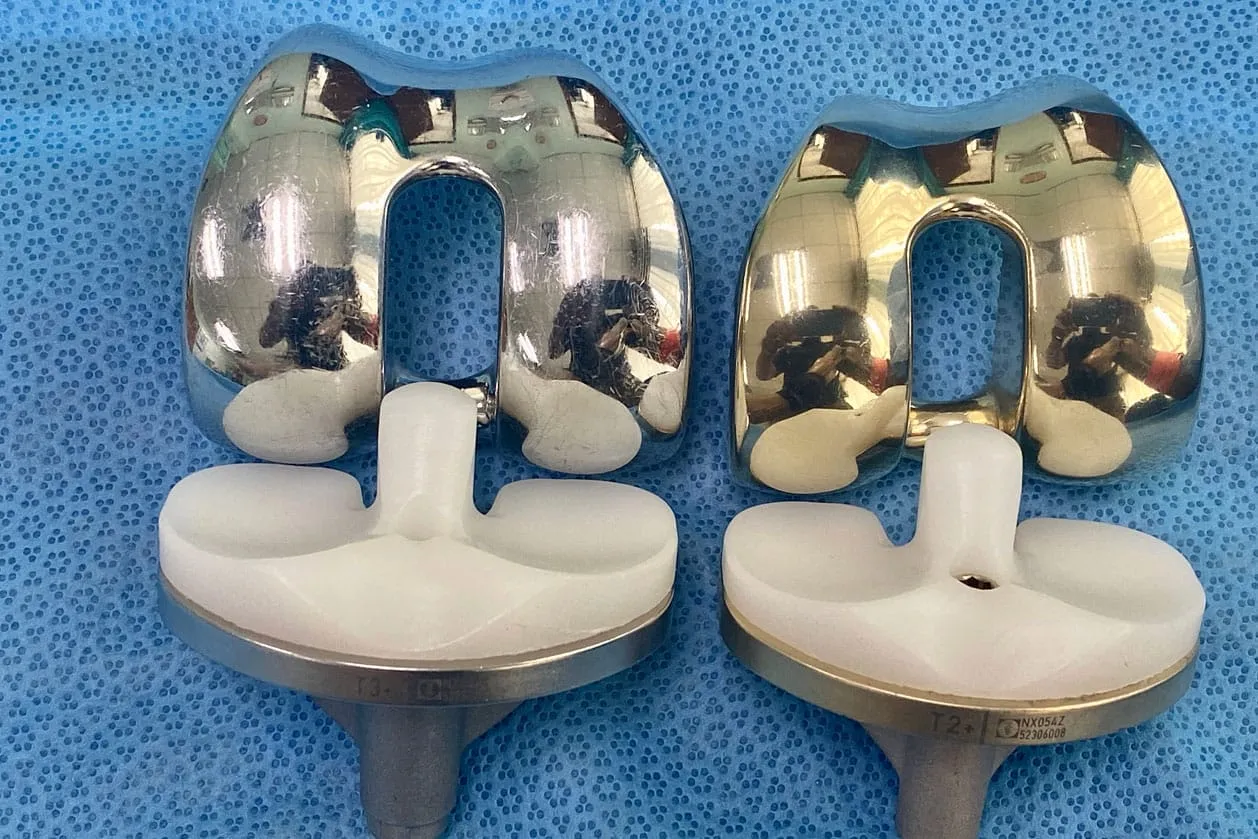
Total ankle replacement surgery is performed under anaesthesia, ensuring that a patient remains comfortable throughout the surgery. Once anaesthesia takes effect, the surgeon makes an incision at the front of the ankle to access the joint. Damaged cartilage and bone surfaces are carefully removed to prepare the area for the implant.
The surgeon then positions the artificial components, which typically include metal parts attached to the tibia and talus. These components are precisely aligned to restore the natural motion and stability of the ankle.
After confirming proper fit and alignment, the surgeon closes the incision with sutures and applies a dressing or protective splint. The procedure is performed with careful attention to preserving surrounding tissues, helping to support recovery and improve overall function after surgery.
Recovery and Rehabilitation After Ankle Replacement Surgery

Immediately after surgery, the ankle is typically placed in a splint or cast to support healing. Patients are usually advised to keep weight off the affected foot for a period of time, and to utilise crutches or a walker as guided by their doctor.
As healing progresses, patients are often placed on a structured rehabilitation programme, set up by their specialist. This programme often includes physiotherapy to improve range of motion, rebuild strength and enhance balance.
Regular follow-up appointments are important to monitor healing and ensure the implant is functioning well. Most patients can gradually return to daily activities over several weeks to months.
Why Choose Our Clinic for Total Ankle Replacement?
Axis Ankle Pain Clinic is a specialist clinic focusing on treating a wide range of ankle conditions. We offer:
Extensive experience in foot & ankle surgery
Our team has managed a wide range of complex ankle conditions, ensuring a high level of surgical precision and patient care.Expertise in modern ankle replacement techniques
Our ankle doctor, consultant orthopaedic surgeon Dr Seng Chusheng, utilises up-to-date surgical approaches and advanced implant systems designed to improve joint function and longevity.Personalised treatment plans tailored to patient needs
Each patient is different. As such, we create individualised care plans based on the condition, lifestyle and recovery goals of each patient.A focus on advanced care, comfort and long-term functional improvement
From consultation through recovery, we prioritise patient comfort while aiming for lasting mobility, stability and quality of life.Looking for ankle replacement treatment in Singapore?
Working Towards Regaining Ankle Function
If persistent ankle pain or stiffness is affecting your daily life, seeking early specialist advice can help you explore appropriate treatment options before your condition worsens. At Axis Ankle Pain Clinic, care is guided by a structured and patient-focused approach, ensuring that each individual receives a comprehensive assessment and a treatment plan tailored to their needs.
Under the care of Dr Seng Chusheng, a Consultant Orthopaedic Surgeon specialising in ankle conditions, patients are supported through every stage of their treatment journey, from diagnosis to recovery.
Contact us today to schedule a consultation and take the next step towards restoring mobility, stability and long-term ankle function.
Frequently Asked Questions (FAQs) on Total Ankle Replacement
How long does an ankle replacement implant last?
How soon can I walk after ankle replacement surgery?
Are there any alternatives to total ankle replacement?
What activities should I avoid to protect my ankle?
Are follow-up appointments necessary even after full recovery?

Our Ankle Specialist in Singapore
Dr Seng Chusheng
Senior Consultant Orthopaedic Surgeon (Sports & Exercise Medicine)
MBBS (Singapore), MRCS (Edinburgh), MMed (Orth), FRCS (Edinburgh)
Dr Seng Chusheng is a consultant orthopaedic surgeon specialising in ankle treatment, and experienced in complex ankle fracture fixation, keyhole ligament reconstruction and cartilage repair for sports injuries of the ankle. He also offers a wide repertoire of treatment options for patients with ankle arthritis, ranging from minimally-invasive arthroscopic ankle fusion to joint replacement.
Dr Seng holds an MBBS and MMed (Orthopaedic Surgery) from the National University of Singapore, and is a Fellow of the Royal College of Surgeons of Edinburgh, UK (Orthopaedic Surgery). He has presented extensively at many orthopaedic conferences including the prestigious American Academy of Orthopaedic Surgeons (AAOS) Annual Scientific Meeting.
At Axis Ankle Pain Clinic, supporting our patients in their recovery and regaining of mobility is our top priority.
We warmly welcome patients with ankle conditions from all walks of life to experience our customised treatment. Contact us to book a same-day or next-day consultation!
Contact Info

Mount Elizabeth Novena Medical Centre
38 Irrawaddy Road, #06-33Singapore 329563
Parkway East Medical Centre
319 Joo Chiat Place, #04-08,Singapore 427989
Mount Alvernia
Medical Centre A
820 Thomson Road, #03-08,Singapore 574623

Telephone



Operating Hours
| Mon - Fri | : | 8:30am - 5:30pm |
| Sat | : | 8:30am - 12:30pm |
| Sunday & PH : Closed | ||